事故
How to Understand
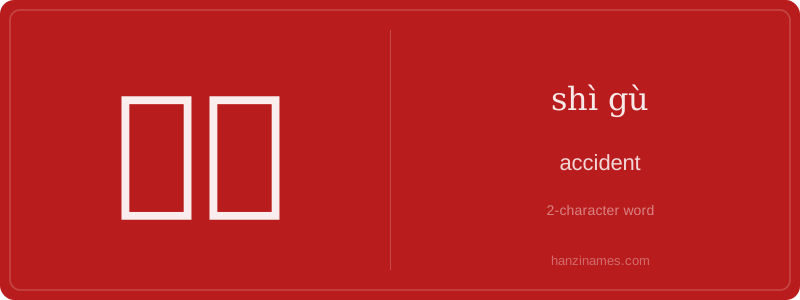
事故 (shì gù) means 'accident' or 'incident' in English. It refers to an unexpected event that often causes harm, damage, or disruption. Unlike similar terms like 事件 (shìjiàn), which is more general for 'event,' 事故 emphasizes the negative or unfortunate nature of what occurred.
The character 事 (shì) means 'matter' or 'affair,' and 故 (gù) means 'reason' or 'old.' Together, they form a word that literally translates to 'a matter of reason' or 'a previous occurrence,' but in modern usage, it has evolved to mean 'accident.' This combination reflects the idea of an event that was not planned or expected.
事故 is commonly used in contexts such as traffic accidents, workplace incidents, or other unplanned events. In Chinese culture, people often emphasize safety and caution to avoid 事故, especially in public spaces or during travel. It's also used in news reports and official communications to describe unexpected events with negative consequences.