民国
How to Understand
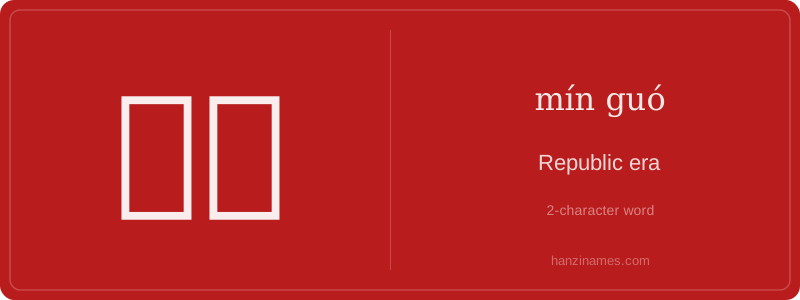
民国 refers to the period in Chinese history from 1912 to 1949, following the fall of the Qing Dynasty and preceding the establishment of the People's Republic of China. It is distinct from other terms like 'China' or 'modern China,' as it specifically denotes this historical era.
The character 民 (mín) means 'people,' and 国 (guó) means 'country' or 'nation.' Together, they literally translate to 'people's country,' reflecting the republican ideals of the time, which emphasized sovereignty of the people rather than a monarchy.
Understanding 民国 is essential for studying modern Chinese history, literature, and culture. It often appears in historical contexts, such as in discussions about political figures, cultural movements, or literary works from that era. In daily conversation, it may be used more in academic or formal settings than in casual speech.