河口
How to Understand
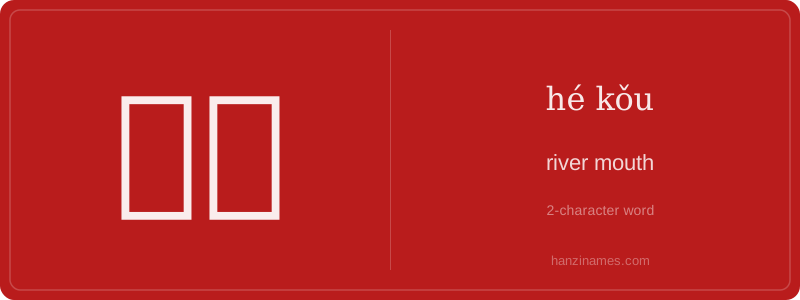
河口 (hé kǒu) refers to the point where a river flows into a larger body of water, such as a lake, sea, or another river. It is commonly used in geographical and environmental contexts to describe the confluence or outlet of a river.
The character 河 (hé) means 'river,' and 口 (kǒu) means 'mouth' or 'opening.' Together, they literally translate to 'river mouth,' reflecting the physical feature where the river meets a larger water system.
河口 is often used in geography textbooks, travel guides, and environmental studies. In China, many cities are located at river mouths, such as the Pearl River Delta or the Yangtze River mouth. Understanding this term can help learners grasp geographical descriptions and improve their comprehension of Chinese maps and texts.