本国
How to Understand
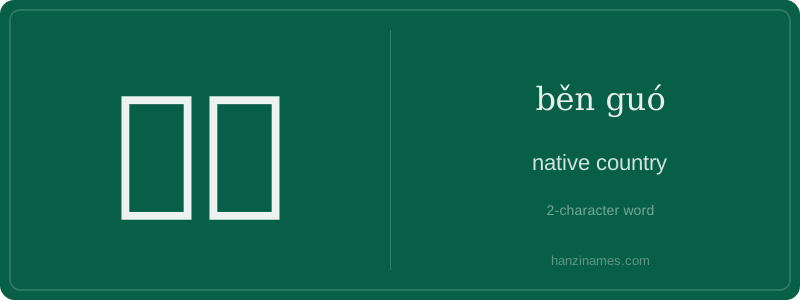
本 (běn) means 'original' or 'this,' and 国 (guó) means 'country.' Together, 本国 refers to one's own country or the country of origin. It is often used in contrast to foreign countries or other nations.
The character 本 (běn) originally meant 'trunk of a tree' and later came to signify 'original' or 'this.' The character 国 (guó) literally means 'country' and is composed of 囗 (a square representing the boundary of a land) and 城 (city), symbolizing the idea of a bounded territory with a city at its center.
本国 is commonly used in formal contexts such as legal documents, official statements, and discussions about national policies. It emphasizes the speaker's own nation, often in comparison to other countries. For example, it can be used in phrases like 本国法律 (běn guó fǎlǜ) meaning 'national law.'