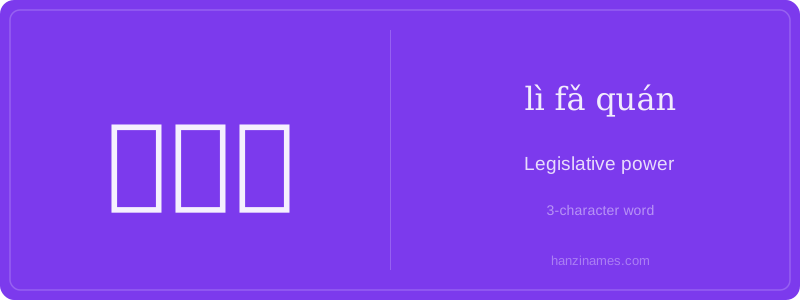
立法权
How to Say
👀 0
How to Write
Meaning: Legislative power
How to Understand
立法权
立法权 refers to the power or authority to create, amend, or repeal laws. It is a fundamental concept in government and legal systems, typically held by legislative bodies such as parliaments or congresses.
The character 立 (lì) means 'to establish' or 'to set up,' 法 (fǎ) means 'law,' and 权 (quán) means 'power' or 'right.' Together, they form a term that directly translates to 'legislative power' or 'authority to make laws.'
立法权 is commonly used in political and legal contexts. In China, it is exercised by the National People's Congress and its Standing Committee. Understanding this term is essential for grasping how laws are created and managed within a country's governance structure.
Example Sentences
全国人大拥有立法权,可以制定和修改法律。
The National People's Congress has legislative power and can formulate and amend laws.
地方人大在一定范围内行使立法权,以适应本地发展需求。
Local people's congresses exercise legislative power within certain limits to meet local development needs.