脑子
How to Say
👀 0
How to Write
Meaning: brain
How to Understand
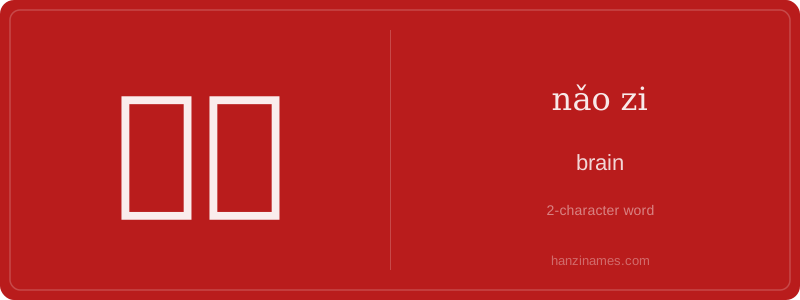
脑子
脑 (nǎo) means 'brain' or 'mind,' and 子 (zǐ) is a suffix often used to form nouns, especially in colloquial language. Together, 脑子 (nǎo zi) literally translates to 'brain' and is commonly used in everyday speech to refer to the organ responsible for thought and decision-making.
The character 脑 (nǎo) originally referred to the head or brain, while 子 (zǐ) is a common suffix that can mean 'child' or be used to form terms related to people or things. In this case, it helps create a more casual, conversational term for 'brain.'
脑子里 is often used in expressions like “在脑子里” (in the mind) or “动脑子” (to think). It is also used in idioms and colloquial sayings, making it an essential word for understanding Chinese conversations and cultural expressions.
Example Sentences
他用脑子想出了一个好主意。
He used his brain to come up with a good idea.
别让烦恼占据你的脑子。
Don't let worries take over your mind.