民族自治
How to Understand
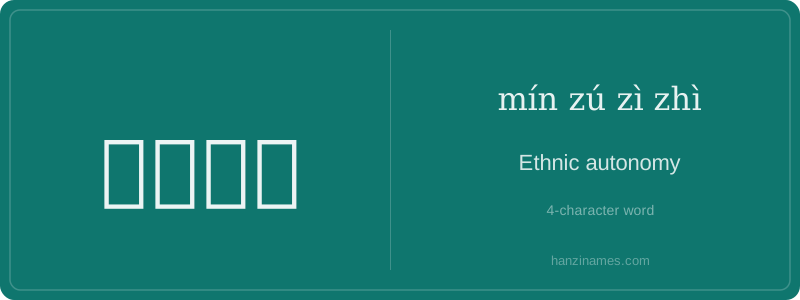
Ethnic autonomy refers to the self-governance of ethnic groups within a larger state, allowing them to maintain their cultural identity while being part of a unified nation. In China, it is a key principle in managing the country's diverse ethnic minorities.
The characters 民 (mín) means 'people' or 'commoner,' 族 (zú) means 'ethnic group' or 'clan,' 自 (zì) means 'self' or 'independent,' and 治 (zhì) means 'govern' or 'administer.' Together, they form a term that emphasizes the right of ethnic groups to manage their own affairs under a broader national framework.
Ethnic autonomy is an important concept in Chinese politics and law, especially in regions like Xinjiang, Tibet, and Inner Mongolia. It is often discussed in relation to cultural preservation, education, and local governance. Understanding this term helps learners grasp how China manages its multi-ethnic society.