古怪
How to Understand
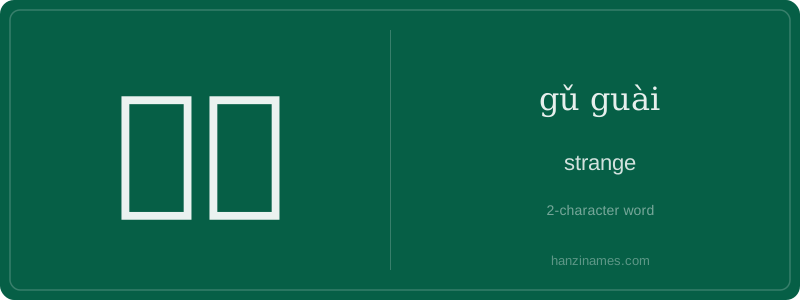
古怪 means 'strange' or 'unusual' in English, describing something or someone that is not typical or expected. It often implies a sense of oddness or peculiar behavior that stands out from the norm.
The character 古 (gǔ) originally meant 'ancient' or 'old,' while 怪 (guài) means 'strange' or 'odd.' Together, they form a word that conveys an unusual or unconventional nature, often with a subtle sense of mystery or unpredictability.
古怪 is commonly used to describe people's quirks, behaviors, or things that are not ordinary. It can be neutral or slightly negative, depending on context. In daily conversation, it might be used to describe a person's strange habits or an unusual situation. It is also sometimes used humorously or affectionately to refer to someone who has unique characteristics.