失误
How to Understand
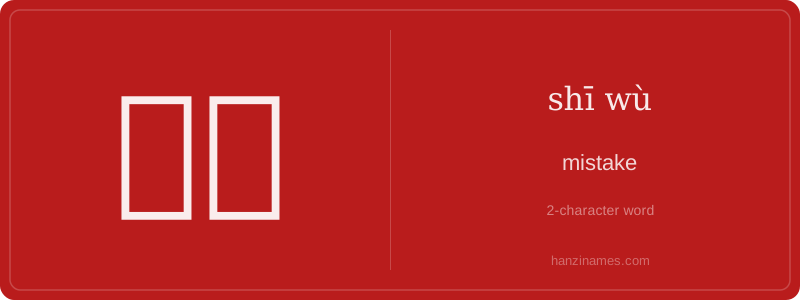
失误 refers to an error or mistake, typically one that is unintentional and results from carelessness or a lapse in judgment. It often implies a deviation from the correct path or expectation, but not as severe as a failure or a crime.
The character 失 (shī) means 'to lose' or 'to miss,' while 误 (wù) means 'to misinterpret' or 'to make a mistake.' Together, they form a compound meaning 'a mistaken action' or 'an error.'
失误 is commonly used in contexts such as sports, business, and daily life to describe small errors that can have consequences. In Chinese culture, acknowledging a失误 is seen as a sign of responsibility and honesty. Related expressions include 出错 (chū cuò), meaning 'to make a mistake,' and 犯错误 (fàn cuòwù), meaning 'to commit an error.'