是非
How to Understand
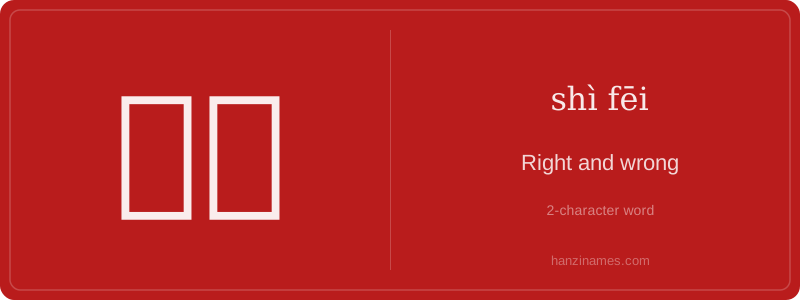
是非 refers to the concept of right and wrong, or the distinction between what is correct and what is incorrect. It often appears in discussions about morality, justice, or debates where clarity on ethical or factual matters is needed.
The character 是 (shì) means 'to be' or 'yes,' while 非 (fēi) means 'not' or 'no.' Together, they form a contrastive pair that highlights the difference between two opposing ideas, such as truth and falsehood, correctness and error.
是非 is commonly used in formal or philosophical contexts, but it also appears in daily conversation when people are trying to clarify an issue or make a judgment. It can also refer to gossip or rumors in some expressions, like “搬弄是非” (bān nòng shì fēi), which means to stir up trouble or spread rumors.