皇权
How to Understand
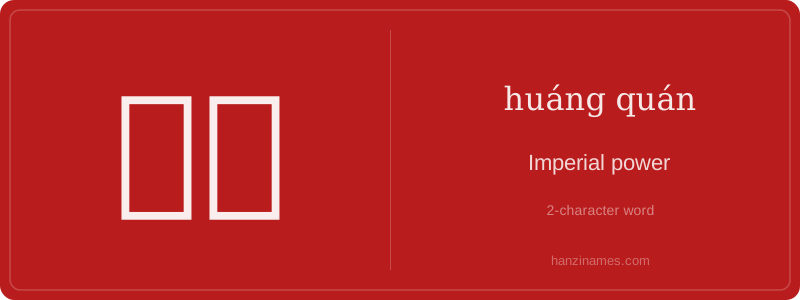
皇权 refers to the supreme authority of an emperor or the centralized power of a monarchy in traditional Chinese political systems. It emphasizes the absolute control of the ruler over the state, distinguishing it from other forms of governance such as democratic or aristocratic rule.
The character 皇 (huáng) originally meant 'emperor' or 'imperial,' and later came to signify 'great' or 'supreme.' 权 (quán) means 'power' or 'authority.' Together, they form a term that encapsulates the essence of imperial sovereignty and autocratic rule.
Historically, 皇权 was central to China's feudal system, symbolizing the divine right of the emperor to govern. Today, it is often used in academic or historical contexts to describe the structure of ancient Chinese dynasties. Understanding 皇权 helps learners grasp the depth of traditional Chinese political philosophy and its influence on modern governance.