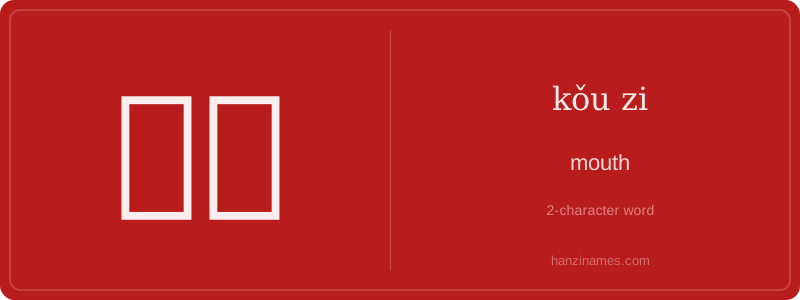
口子
How to Say
👀 0
How to Write
Meaning: mouth
How to Understand
口子
口子 refers to the mouth, the opening in the face used for speaking, eating, and breathing. It is a literal term, distinct from more abstract or metaphorical uses of 'mouth' in English.
The character 口 (kǒu) means 'mouth' or 'opening,' while 子 (zǐ) is a suffix often used to denote a small object or child. Together, they form a straightforward term for 'mouth,' emphasizing its physical nature.
口子 is commonly used in everyday speech and writing. It appears in phrases like 嘴角 (zuǐ jiǎo, 'corner of the mouth') or 口腔 (kǒu qiāng, 'oral cavity'). It is also used in more colloquial contexts, such as 挖口子 (wā kǒu zi, 'to create an opening' or 'to make a hole').
Example Sentences
他张开嘴,露出一口白牙。
He opened his mouth, revealing a set of white teeth.
这个袋子有个口子,东西都漏出来了。
This bag has a hole, and everything is leaking out.