绝望
How to Understand
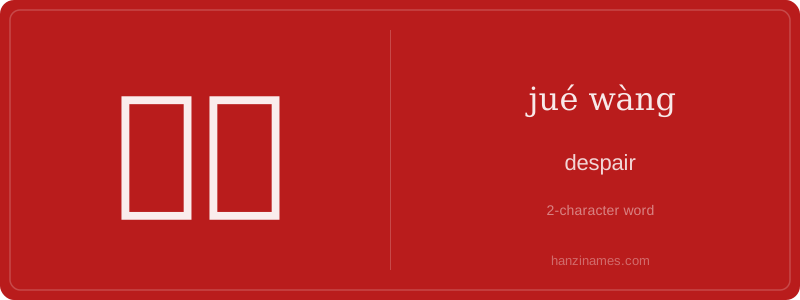
绝望 (jué wàng) refers to a deep feeling of hopelessness, often stemming from a situation that seems impossible to change. It is stronger than simple sadness or disappointment and implies a loss of all hope for a positive outcome.
The character 绝 (jué) means 'to end' or 'absolute,' while 望 (wàng) means 'hope' or 'look forward to.' Together, they form a word that literally means 'the end of hope,' emphasizing the complete loss of optimism.
Despair is commonly used in literature, poetry, and personal narratives to express emotional extremity. In Chinese culture, it is often contrasted with hope (希望, xī wàng), highlighting the importance of maintaining hope even in difficult times. The term may also appear in psychological discussions or in stories about personal struggles and resilience.