了不起
How to Understand
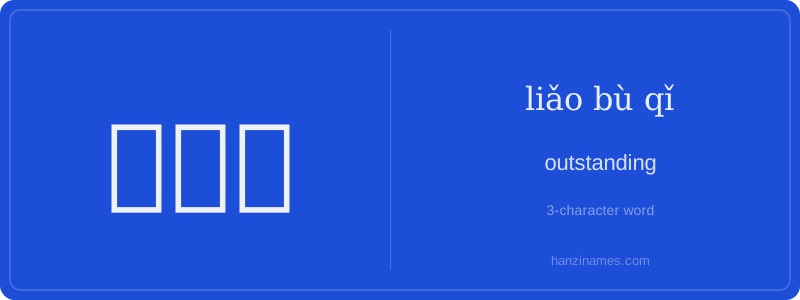
了不起 is an adjective meaning 'outstanding,' 'remarkable,' or 'impressive.' It is used to describe someone or something that is exceptional, especially in terms of achievement, skill, or quality. Unlike similar expressions like 好 (good) or 优秀 (excellent), 了不起 carries a stronger sense of admiration and surprise at the level of accomplishment.
The word is composed of three characters: 了 (le), which often indicates completion or emphasis; 不 (bù), meaning 'not'; and 起 (qǐ), meaning 'to rise' or 'to start.' Together, they form a phrase that literally translates to 'not small' or 'not trivial,' implying something significant or impressive.
了不起 is commonly used in everyday conversation to praise someone's abilities, achievements, or actions. It can be applied in both formal and informal settings. For example, it might be used to compliment a student's performance, a worker's effort, or an artist's work. It is also often heard in media and public discourse to highlight remarkable individuals or events.