荒漠
How to Understand
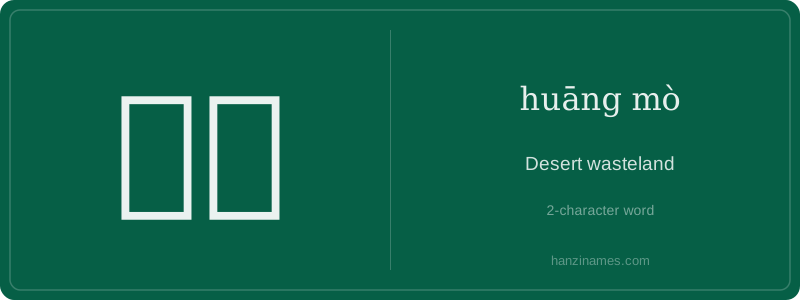
荒漠 (huāng mò) refers to a vast, barren, and arid area of land that is typically devoid of vegetation and human settlement. It is often used to describe deserts or regions that are extremely dry and inhospitable, emphasizing their emptiness and lack of life.
The character 荒 (huāng) means 'wild,' 'untamed,' or 'barren,' while 漠 (mò) literally means 'desert' or 'wasteland.' Together, they create a powerful image of an isolated, lifeless landscape, often with a poetic or dramatic tone.
荒漠 is commonly used in both literal and metaphorical contexts. In literature or poetry, it may symbolize loneliness, isolation, or the harshness of nature. In real-world usage, it is often associated with regions like the Gobi Desert or the Taklamakan Desert in China. Understanding this term can help learners grasp the cultural and environmental significance of such landscapes in Chinese literature and geography.