放出
How to Say
👀 0
How to Write
Meaning: release
How to Understand
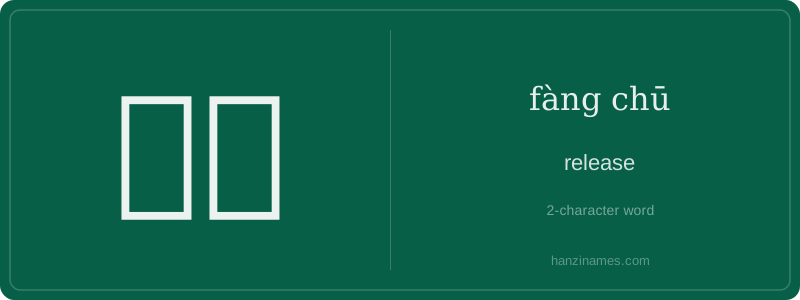
放出
放出 means 'to release' or 'to let go,' often used in contexts involving letting something out, such as releasing an animal, a person, or even emotions.
The character 放 (fàng) means 'to place' or 'to release,' while 出 (chū) means 'to go out' or 'to exit.' Together, they convey the idea of setting something free or allowing it to leave a confined space.
放出 is commonly used in both literal and figurative contexts. For example, it can describe releasing a prisoner, letting out a secret, or even letting go of feelings. It is also used in more abstract expressions like 放出压力 (fàng chū yā lì), meaning 'to release pressure.'
Example Sentences
他把那只鸟放出了笼子。
He released the bird from the cage.
她终于把心里的委屈放出来了。
She finally let out her inner sorrow.