旨在
How to Understand
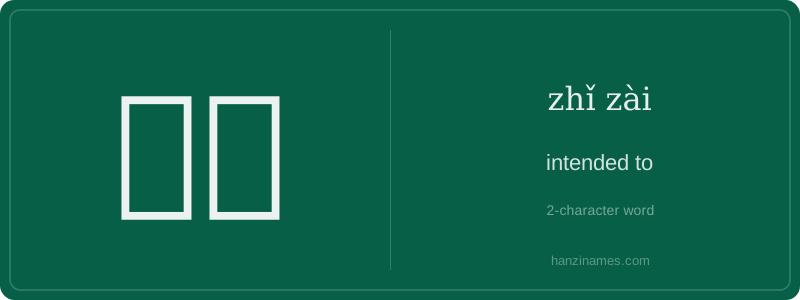
旨在 is an adverbial phrase that means 'intended to' or 'aimed at.' It is used to express the purpose or goal of an action, often in formal or written contexts.
The character 旨 (zhǐ) originally meant 'purpose' or 'intention,' and it has roots in ancient Chinese writing. The character 在 (zài) means 'at' or 'in,' but in this context, it functions as a particle to indicate the focus or target of an action. Together, 旨在 emphasizes the intended outcome or objective of something.
旨在 is commonly used in official documents, policy statements, and academic writing. It conveys a sense of clarity and intentionality. Learners should note that it is typically followed by a verb or a clause that describes the intended result. For example, it might appear in sentences like 'This policy is aimed at improving education.'