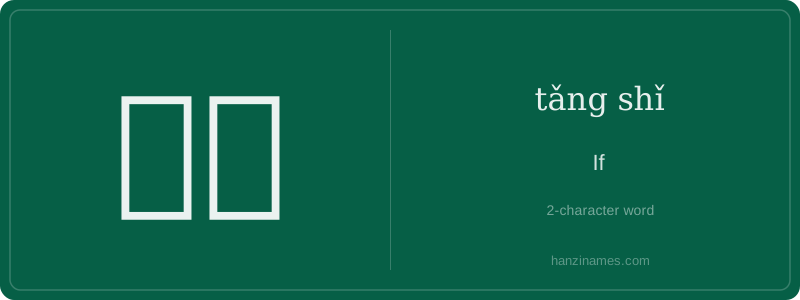
倘使
How to Say
👀 0
How to Write
Meaning: If
How to Understand
倘使
倘使 is a conjunction used to introduce a hypothetical or conditional situation, similar to 'if' in English. It is often used to express a possibility or an imagined scenario that may or may not happen.
The character 倘 (tǎng) originally meant 'if' or 'in the event of,' and 使 (shǐ) means 'to cause' or 'to make.' Together, they form a phrase that conveys a conditional or hypothetical situation.
Though not as commonly used in modern spoken Chinese as 如果 (rúguǒ), 倘使 is still found in literary or formal contexts. It adds a more refined or poetic tone to sentences and is often used in written Chinese literature or academic writing.
Example Sentences
tǎng shǐ nín zhī dào zhè jiàn shì, huì bù huì rèn wéi zěn me yàng?
If you knew this thing, would you think it was how?
tǎng shǐ tā méi yǒu chū guó, tā hái huì rèn shí wǒ ma?
If he hadn't gone abroad, would he still have recognized me?