除去
How to Understand
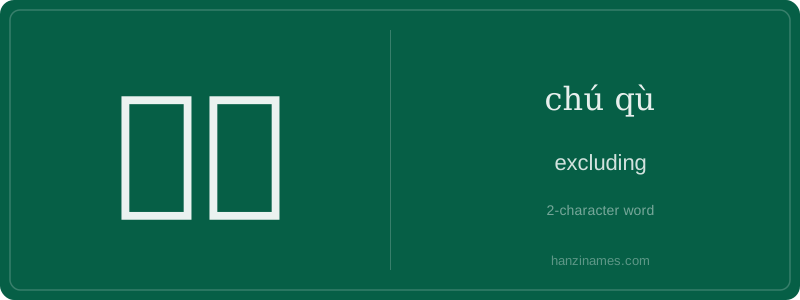
除去 means 'excluding' or 'apart from' in English. It is used to indicate that something is not included or considered in a statement or situation. Unlike similar words like 'except,' 除去 often has a more formal or literary tone and is frequently used in written Chinese.
The character 除 (chú) originally meant 'to remove' or 'to eliminate,' while 去 (qù) means 'to go' or 'to leave.' Together, they form a phrase that literally translates to 'remove and go,' but in modern usage, it functions as a preposition or adverb meaning 'excluding.'
在正式或书面语中,除去常用于列举事物时排除特定项,如“除去天气原因,活动照常进行。” It is also used in mathematical contexts or logical statements to denote exclusion. Understanding 除去 helps learners grasp how Chinese handles negation and inclusion in complex sentences.