洞口
How to Understand
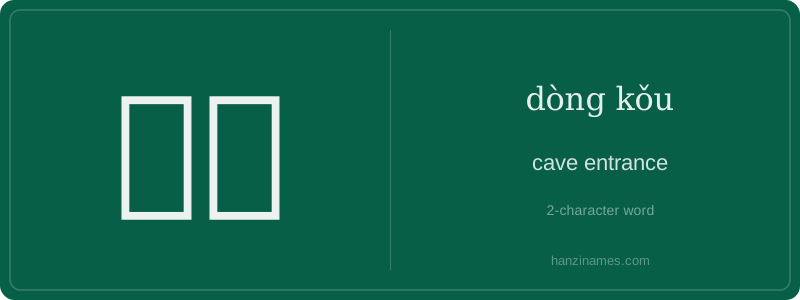
洞口 (dòngkǒu) literally means 'cave entrance' and refers to the opening or mouth of a cave. It is commonly used in both literal and metaphorical contexts, such as describing natural formations or representing a starting point or threshold.
The character 洞 (dòng) means 'cave' or 'hole,' while 口 (kǒu) means 'mouth' or 'opening.' Together, they create a compound that directly translates to 'cave mouth' or 'cave entrance.' This word reflects the physical structure of a cave and can also be used symbolically to describe a beginning or transition point.
In real-world usage, 洞口 appears in nature-related contexts, such as hiking or geology. It may also appear in literature or idioms to represent a threshold between two states or places. Knowing this term helps learners understand descriptions of landscapes and can aid in navigating or discussing caves or tunnels in Chinese-speaking environments.