万人次
How to Understand
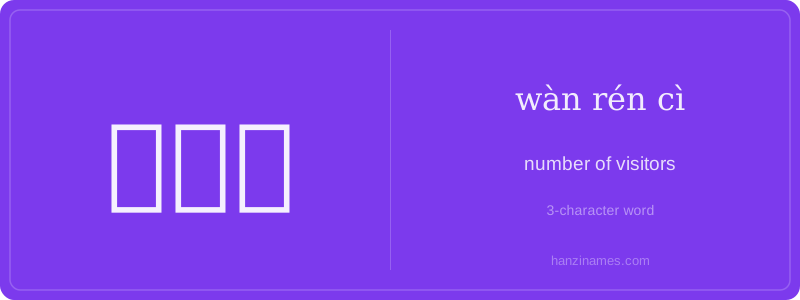
万人次 refers to the number of people who have visited or participated in an event, often used in contexts like tourism, events, or public activities. It is a unit that represents 10,000 people, making it a convenient way to express large numbers of visitors or attendees.
The word is composed of 万 (wàn), meaning 'ten thousand,' 人 (rén), meaning 'person,' and 次 (cì), meaning 'time' or 'occasion.' Together, they form a term that quantifies the scale of human participation in specific events or locations.
It is commonly used in official reports, media, and data analysis to describe visitor statistics. For example, it might be used to report how many people visited a museum or attended a festival in a given period. Understanding 万人次 helps learners grasp how Chinese data is presented in real-world contexts.