御史
How to Understand
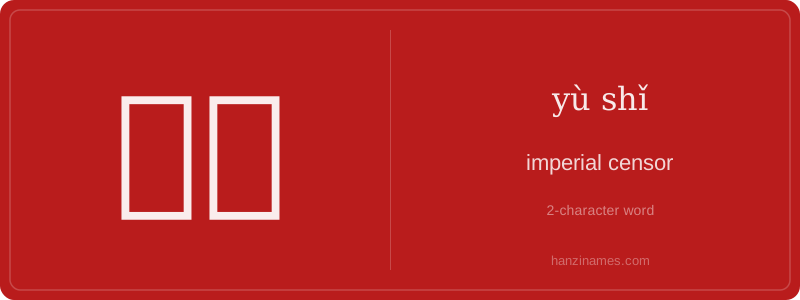
御史 (yù shǐ) refers to an official in ancient China who was responsible for monitoring and reporting on the conduct of government officials. This role was crucial in maintaining the integrity of the imperial administration.
The character 御 (yù) originally meant 'to control' or 'to manage,' while 史 (shǐ) is a variant of 史, which means 'historian' or 'scribe.' Together, they denote someone who oversees and records the actions of officials, ensuring accountability.
御史 played a significant role in the bureaucratic system of dynastic China. They were often seen as impartial watchdogs of the court, and their reports could influence political decisions. Today, the term is mainly used in historical contexts or in discussions about traditional Chinese governance structures.