除外
How to Understand
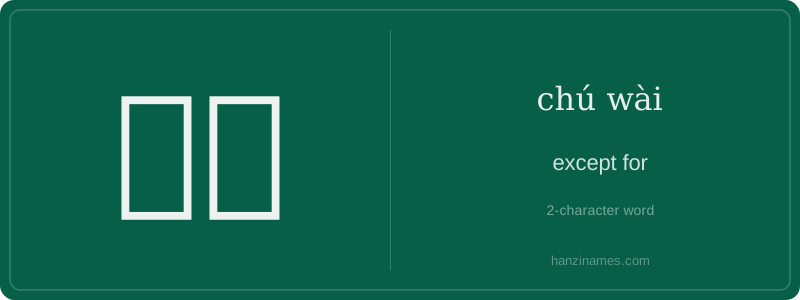
除外 (chú wài) is a preposition meaning 'except for' or 'other than.' It is used to exclude something from a general statement, indicating that the exception is not included in the main idea.
The character 除 (chú) originally meant 'to remove' or 'to eliminate,' while 外 (wài) means 'outside' or 'external.' Together, they form a phrase that conveys the idea of excluding something from a group or situation. This expression has roots in classical Chinese and is commonly used in both written and spoken language.
除外 is frequently used in everyday conversations, formal writing, and legal or academic contexts. It often appears in phrases like “除了...以外” (chú le ... yǐwài), which means 'except for...' It helps clarify exclusions and is essential for precise communication in Chinese.