早晚
How to Say
👀 0
How to Write
Meaning: morning and evening
How to Understand
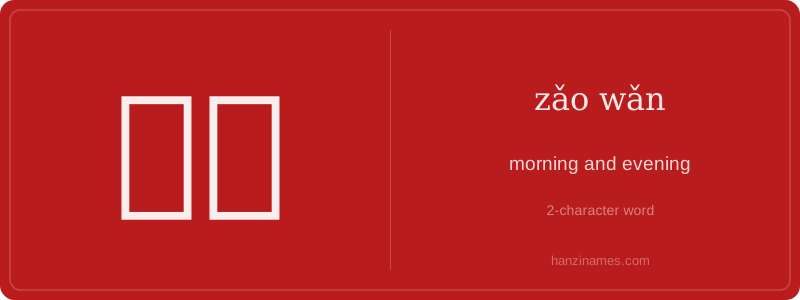
早晚
早晚 refers to the time of day, specifically morning and evening. It can also be used more abstractly to mean 'at some point' or 'sooner or later,' depending on context.
The character 早 (zǎo) means 'early' or 'morning,' while 晚 (wǎn) means 'late' or 'evening.' Together, they represent the two main divisions of the day. In classical Chinese, this term could also imply a general timeframe, such as 'in the future.'
In modern usage, 早晚 is often used in phrases like 早晚都去 (zǎo wǎn dōu qù), meaning 'I will go sooner or later.' It's commonly used in casual speech to express inevitability or eventual action. The phrase is also used in expressions like 早晚要发生 (zǎo wǎn yào fāshēng), meaning 'it will eventually happen.'
Example Sentences
我每天早上和晚上都去跑步。
I go for a run every morning and evening.
你早晚都会明白这个道理。
You will eventually understand this truth.