早
Character Story & Explanation
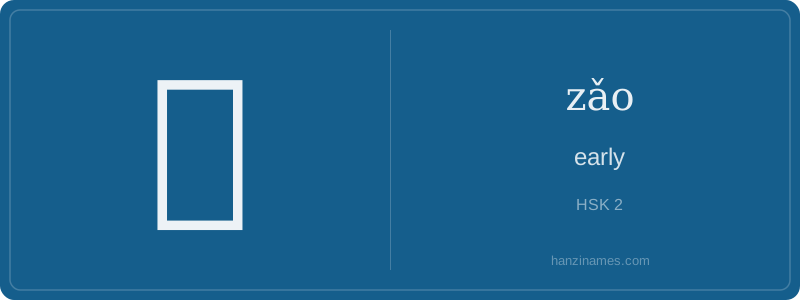
In modern Chinese life, 早 appears constantly: on school timetables (早自习 zǎo zìxí — 'morning self-study'), metro announcements ('Please board early'), and even coffee shop chalkboards ('早鸟优惠 zǎo niǎo yōuhuì' — 'early bird discount'). A well-documented idiom is 早出晚归 (zǎo chū wǎn guī), meaning 'leave early, return late' — historically describing farmers’ work rhythms and now used for diligent workers. It’s among the top 100 most frequently used characters in written Chinese (based on the 2020 Beijing Language and Culture University corpus).
The character 早 is a phono-semantic compound: the left side 日 (rì, 'sun/day') is the semantic component, indicating time; the right side is 十 (shí, 'ten') plus 丨 (gǔn, a vertical stroke), historically representing 'dawn light rising before ten o’clock' — a documented Han dynasty explanation in the Shuōwén Jiězì dictionary (121 CE). No oracle bone form survives, but its seal script version clearly shows the sun and an upward stroke symbolizing rising light.
Hello, learners! The character 早 (zǎo) means 'early' — as in early morning, early arrival, or doing something ahead of time. It’s a Level 2 HSK character, so you’ll see it often in daily conversations and beginner textbooks. Notice its radical is 日 (rì), meaning 'sun' or 'day' — this tells us the character relates to time, especially daylight hours. Its six strokes are simple and logical: start with the sun radical on the left, then add the 'ten' component (十) above and 'vertical line' (丨) below on the right.
What makes 早 special is how naturally it fits into greetings and routines. In China, saying 早 (just 'zǎo!') is a friendly, informal way to say 'Good morning!' — like a warm nod between colleagues or classmates. It’s shorter and more casual than 早上好 (zǎoshang hǎo), but equally understood in relaxed settings. This shows how Chinese often shortens common phrases in spoken language — a great hint for your listening practice!
Remember: 早 is not just about clock time — it also carries cultural value. Being 'early' reflects diligence, respect (e.g., arriving early for a meeting), and even health ('early to bed, early to rise'). That’s why you’ll find it in proverbs like 早睡早起 (zǎo shuì zǎo qǐ) — 'sleep early, rise early'. As you learn, connect 早 to habits and attitudes, not just hours on a watch — that’ll help it stick!
Example Sentences
Common Compounds
Similar Characters — Don't Mix These Up
Your First Step into Chinese Culture: Get a Chinese Name
Every journey into Chinese begins with a name. Use our free Chinese name generator to create a meaningful, personalized Chinese name that fits you perfectly.
Get My Chinese Name →