巨额
How to Understand
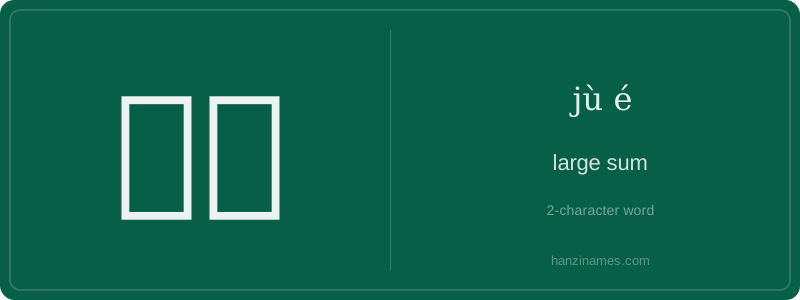
"巨额" (jù é) refers to a very large sum of money, typically used to describe significant financial amounts that are notably high. It is often used in contexts involving finance, business, or legal matters where the amount involved is substantial and noteworthy.
The character "巨" (jù) means 'huge' or 'massive,' while "额" (é) originally referred to a 'front' or 'surface,' but in this context, it is used to denote a 'sum' or 'amount.' Together, they form a term that emphasizes the enormity of a financial figure.
"巨额" is commonly used in formal or written language, especially when discussing loans, investments, fines, or settlements. It is less common in everyday speech, where more colloquial terms might be preferred. Understanding "巨额" can help learners grasp how Chinese speakers emphasize the scale of financial transactions.