伺候
How to Understand
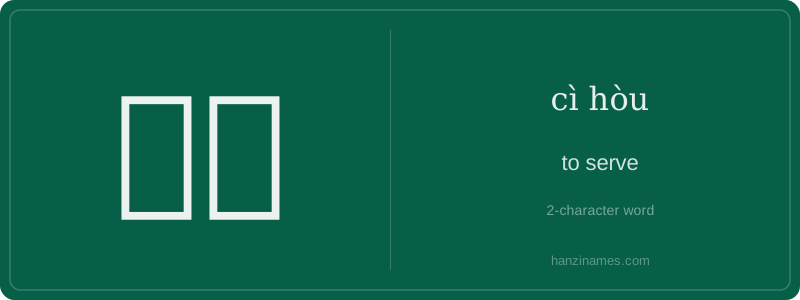
伺候 means 'to serve' or 'to attend to someone,' often in a context of providing care, assistance, or service, typically in a domestic or personal setting. It implies a relationship of dependence or hierarchy, such as a servant attending to a master or a caregiver looking after someone.
The character 伺 (sì) originally meant 'to watch, observe, or wait,' while 候 (hòu) means 'to wait, expect, or be ready.' Together, they form a term that conveys the idea of being attentive and ready to serve, emphasizing vigilance and care.
In modern usage, 伺候 is commonly found in traditional or formal contexts, such as in households, restaurants, or service industries. It may also appear in historical or literary texts, reflecting social roles and relationships. Learners should note that it carries a sense of obligation and respect, making it suitable for formal or polite situations.