空气
How to Understand
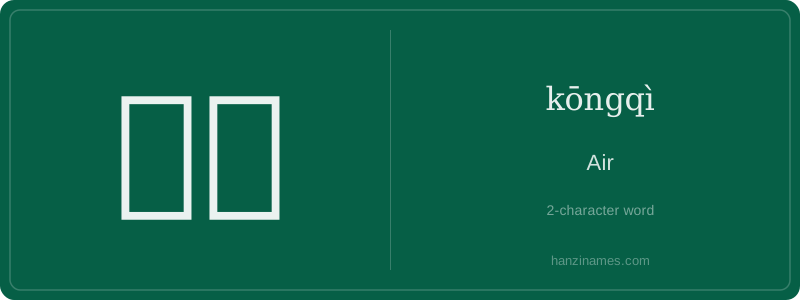
空气 (kōngqì) refers to the invisible mixture of gases that surrounds the Earth and is essential for life. It differs from similar terms like 'wind' or 'atmosphere' by emphasizing the general presence of air rather than its movement or the entire planetary envelope.
The character 空 (kōng) means 'empty' or 'sky,' and 气 (qì) means 'air' or 'energy.' Together, they form a word that literally translates to 'empty air,' reflecting the idea of air as an intangible yet vital substance.
空气 is commonly used in everyday contexts, such as describing weather conditions, health concerns, or environmental issues. For example, people might talk about the quality of air in a city or how fresh the air is in the mountains. The phrase also appears in idioms and expressions related to health and well-being.