拢共
How to Understand
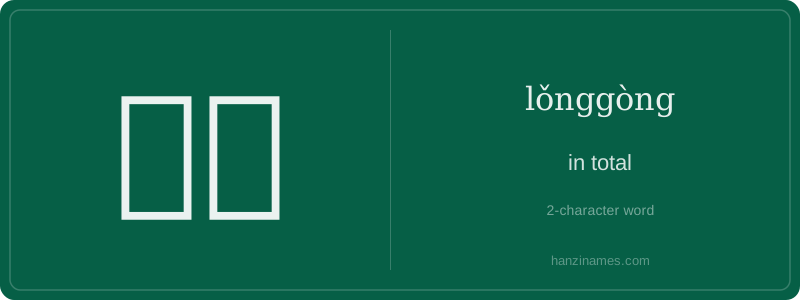
拢共 means 'altogether' or 'in total,' used to indicate the sum or overall amount of something. It is often used in contexts where a total is being calculated or emphasized, distinguishing it from partial or individual components.
The character 拢 (lǒng) originally meant 'to gather' or 'to collect,' while 共 (gòng) means 'common' or 'to share.' Together, they convey the idea of bringing things together to form a total or collective amount.
It is commonly used in daily conversations, especially when summarizing numbers or quantities. For example, it might be used when calculating expenses, counting items, or expressing an overall figure in a sentence. It is more formal than some alternatives like “总共” (zǒnggòng), but still widely understood and used in both spoken and written Chinese.