飘荡
How to Understand
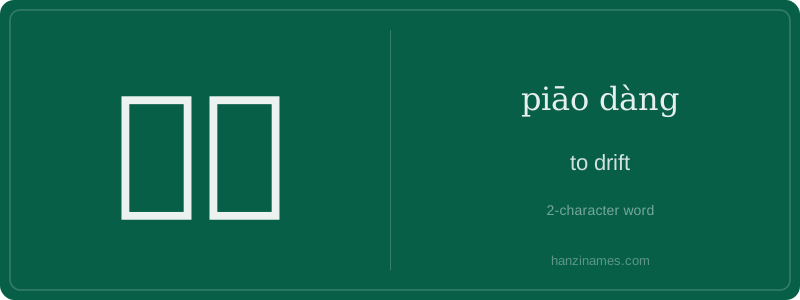
飘荡 (piāo dàng) means to drift or wander, often used to describe the movement of something light or the feeling of being unmoored. It can also refer to a mood or sound that lingers in the air, creating a sense of emptiness or melancholy.
The character 飘 (piāo) originally meant 'to float' or 'to drift,' while 荡 (dàng) means 'to swing' or 'to move back and forth.' Together, they evoke a visual of something gently moving without direction, like a leaf in the wind or a melody that lingers in the air.
飘荡 is commonly used in poetic or emotional contexts, such as describing the lingering sound of music or a person's aimless wandering. It carries a soft, almost melancholic tone and is often associated with nature or introspective moods. In modern usage, it may also describe a state of uncertainty or drifting through life without clear purpose.