完成
How to Say
👀 0
How to Write
Meaning: to complete
How to Understand
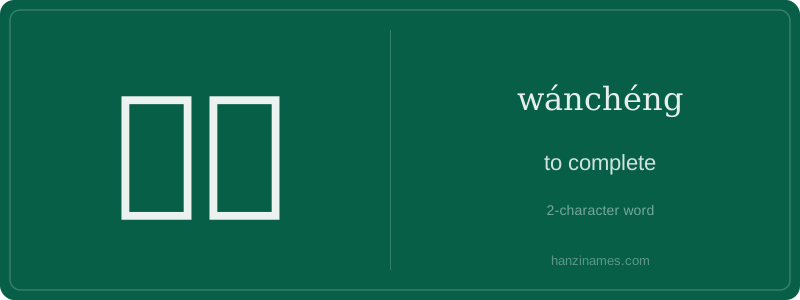
完成
完成 means 'to accomplish' or 'to complete.' It refers to the successful realization of a task, goal, or process. Unlike similar words like 'finish,' 完成 often implies a sense of achievement or fulfillment, not just the end of an action.
The character 完 (wán) originally meant 'perfect' or 'whole,' and 成 (chéng) meant 'to become' or 'to succeed.' Together, they convey the idea of something being fully realized or achieved.
完成 is widely used in both formal and informal contexts, such as in work, school, or daily life. For example, it can describe finishing a project, completing a task, or achieving a personal goal. In Chinese culture, completing something is often seen as a sign of responsibility and dedication.
Example Sentences
他完成了工作。
He completed his work.
这个项目已经完成了。
This project has been completed.