冤枉
How to Say
👀 0
How to Write
Meaning: to be wronged
How to Understand
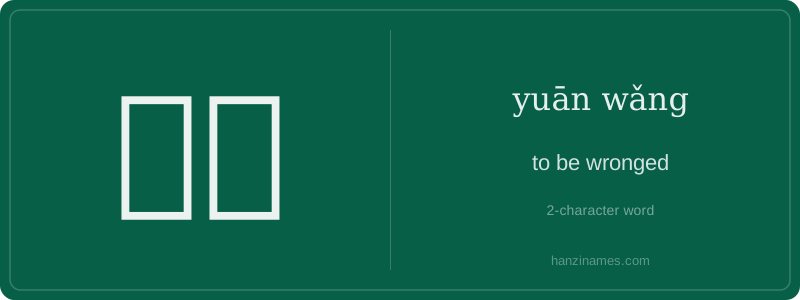
冤枉
冤枉 means to falsely accuse or to be unjustly treated. It conveys a sense of injustice, often involving a misunderstanding or an incorrect judgment that leads to unfair consequences.
The character 冤 (yuān) means 'wrong' or 'injustice,' while 枉 (wǎng) means 'to be wronged' or 'to suffer wrongly.' Together, they form a term that emphasizes the emotional and moral weight of being accused without cause or suffering undeservedly.
冤枉 is commonly used in situations where someone feels they have been misunderstood or unfairly treated. It is often associated with legal or personal disputes, and it reflects a deep cultural value on fairness and truth in Chinese society.
Example Sentences
他被冤枉了,其实他什么都没做。
He was wronged; in fact, he did nothing.
她因为误会而被冤枉,心里很难过。
She was wronged due to a misunderstanding, and she felt very sad.