行使
How to Say
👀 0
How to Write
Meaning: exercise
How to Understand
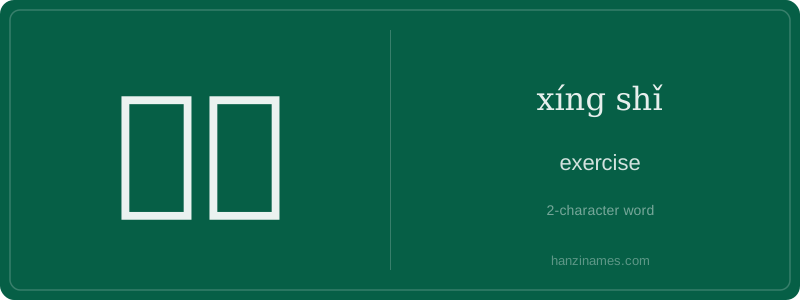
行使
行使 means 'to exercise' or 'to carry out,' typically referring to the act of using a right, power, or authority. It is often used in formal or official contexts, such as exercising one's rights or powers.
The character 行 (xíng) means 'to go' or 'to carry out,' while 使 (shǐ) means 'to use' or 'to employ.' Together, they form a compound that emphasizes the active application of something, such as a right or function.
行使 is commonly seen in legal, political, or organizational settings. For example, a government may行使 its authority, or an individual may行使 their right to vote. Understanding this term helps learners grasp how Chinese communicates the idea of actively using power or privilege in formal situations.
Example Sentences
他有权行使自己的投票权。
He has the right to exercise his voting power.
公司董事会行使了批准新项目的权利。
The board of directors exercised the right to approve the new project.