河流
How to Understand
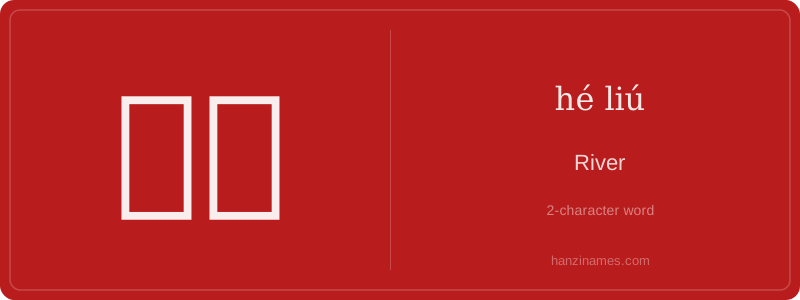
河流 (hé liú) is the Chinese word for 'river,' referring to a natural flowing body of water that moves toward an ocean, sea, lake, or another river. It is distinct from other water bodies like lakes or streams, as rivers are typically larger and have a more defined current.
The character 河 (hé) originally meant 'river' and was used to refer to the Yellow River, while 流 (liú) means 'to flow' or 'current.' Together, they form a term that emphasizes both the physical presence and movement of water.
Throughout Chinese culture, rivers have played vital roles in agriculture, trade, and transportation. Major rivers like the Yangtze and Yellow River are central to China's history and identity. In modern usage, 河流 is commonly used in geography, environmental discussions, and literature to describe natural waterways.