只是
How to Understand
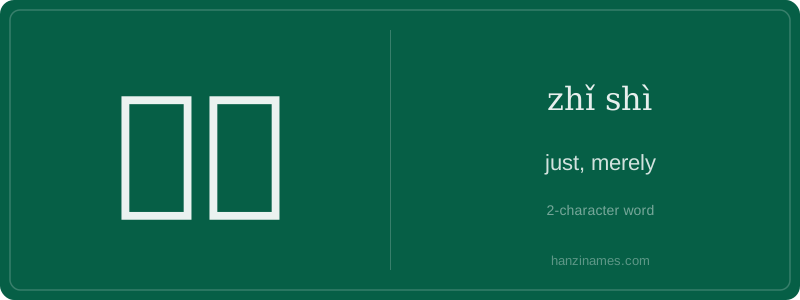
只是 is an adverb that means 'just' or 'merely,' used to downplay the significance of something or to indicate a limited scope. It often softens the statement, suggesting that the situation is not as serious or extensive as it might seem.
The character 只 (zhǐ) originally meant 'only' or 'just,' while 是 (shì) is the verb 'to be.' Together, they form a phrase that emphasizes limitation or modesty in expression, commonly used in spoken and written Chinese to convey humility or understatement.
只是 is frequently used in daily conversations to express modesty, clarify misunderstandings, or soften a statement. For example, when someone compliments you, you might respond with 只是运气好 (just lucky) to show humility. It's also used in storytelling to set the scene or introduce a minor point.