其余
How to Understand
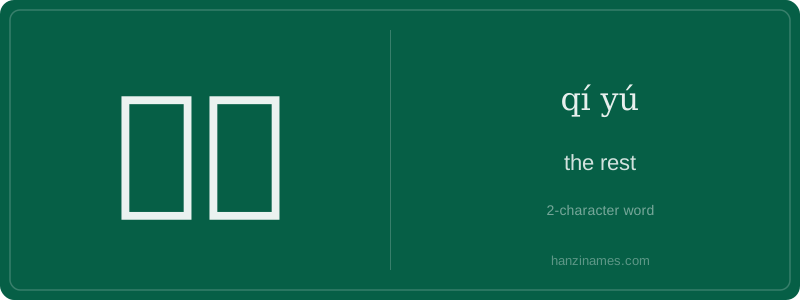
其余 means 'the rest' or 'the remaining part' of something. It is used to refer to what is left after a portion has been mentioned or taken. Unlike 'other,' which can be more general, 其余 specifically refers to what remains after a specific amount has been accounted for.
The character 其 (qí) originally meant 'his' or 'its,' but in this context, it functions as a pronoun meaning 'the' or 'that.' 余 (yú) means 'remaining' or 'leftover.' Together, they form a phrase that literally translates to 'the remaining one.'
其余 is commonly used in everyday speech and writing to indicate what is left after something has been removed or distributed. For example, it might be used when talking about food left over after a meal, or items not yet assigned. It is also found in formal contexts, such as legal or academic documents, to describe what remains after certain parts have been addressed.