失去
How to Understand
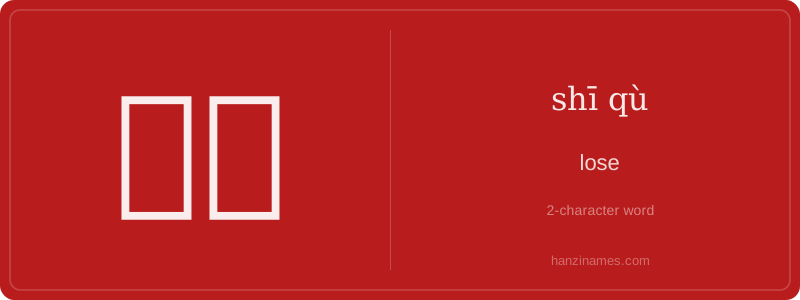
失去 means 'to lose' or 'to be without' in English. It refers to the act of no longer having something, whether it's a physical object, a relationship, or an opportunity. Unlike 'lose' in English, which can also mean to fail to win, 失去 is more about the absence or deprivation of something.
The character 失 (shī) originally meant 'to miss' or 'to be absent,' while 去 (qù) means 'to go' or 'to leave.' Together, they convey the idea of something leaving or being taken away, emphasizing the loss rather than the act of losing itself.
失去 is commonly used in both literal and metaphorical contexts. For example, it can describe losing a job, losing trust, or losing one's way. In Chinese culture, the concept of losing is often linked with regret, sorrow, or the importance of holding on to what matters.