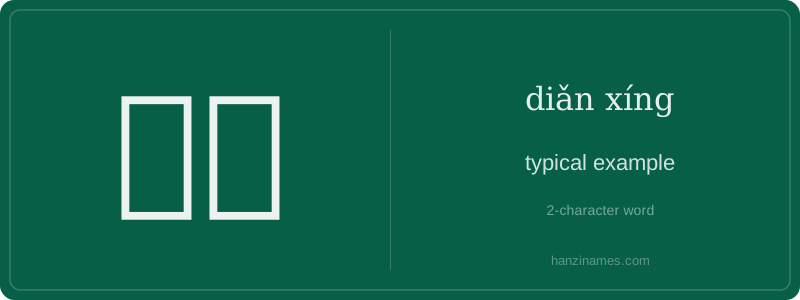
典型
How to Say
👀 0
How to Write
Meaning: typical example
How to Understand
典型
典型 means 'typical example' or 'archetypal representation.' It refers to something that perfectly represents a particular category, group, or concept, often used to illustrate the essence of something.
The character 典 (diǎn) originally meant 'classical text' or 'standard,' and later came to mean 'model' or 'example.' 型 (xíng) means 'form' or 'type.' Together, they form a word that conveys the idea of an ideal or representative example.
典型 is commonly used in both formal and informal contexts. For instance, it can describe a person, situation, or object that exemplifies a certain trait or characteristic. In Chinese culture, it is often used in education, media, and daily conversations to highlight what is considered standard or representative.
Example Sentences
他是个典型的中国学生,勤奋又聪明。
He is a typical Chinese student, hardworking and smart.
这个故事是一个典型的童话故事。
This story is a typical fairy tale.