早就
How to Understand
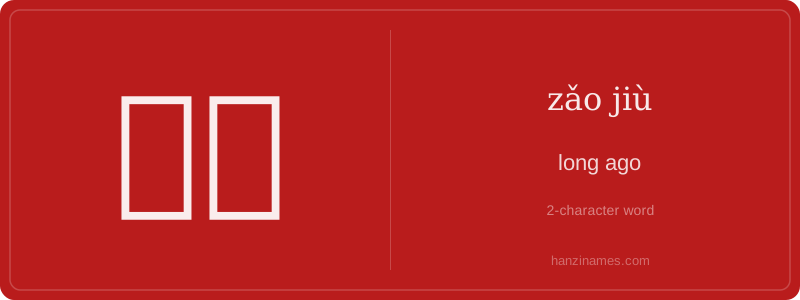
早就 means 'long ago' or 'for a long time,' indicating that something has been true or happened for an extended period. It emphasizes the duration of a past state or action, often used to express that something was already the case before now.
The character 早 (zǎo) means 'early' or 'soon,' while 就 (jiù) means 'already' or 'immediately.' Together, 早就 conveys the idea of something having been true or completed well before the present moment, emphasizing the passage of time and the completion of an action.
早就 is commonly used in everyday conversations to describe past events or states that have persisted over time. For example, it can be used to say, 'I have known this for a long time' or 'This has been the case for years.' It adds nuance to statements by highlighting the temporal aspect of an event or condition.