剩下
How to Understand
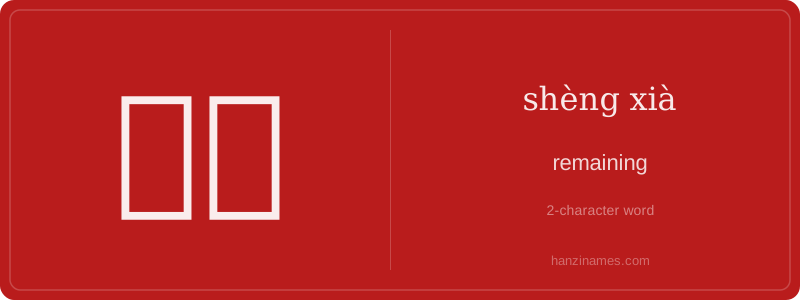
剩 is a verb meaning 'to remain' or 'to be left over,' and 下 is a character indicating 'down' or 'below.' Together, 剩下 means 'remaining' or 'left over.' It often describes something that is still present after other parts have been removed or used.
The character 剩 comes from the radical for 'person,' suggesting a sense of what is left behind by people. 下 means 'down,' but in this context, it functions more as a directional particle, contributing to the idea of something being left behind or remaining in a place.
剩 is commonly used in everyday situations, such as describing leftover food, remaining time, or what is left after an action. It is also part of common expressions like “还剩多少?” (How much is left?), which is useful in daily conversations about quantities or time.