忍不住
How to Understand
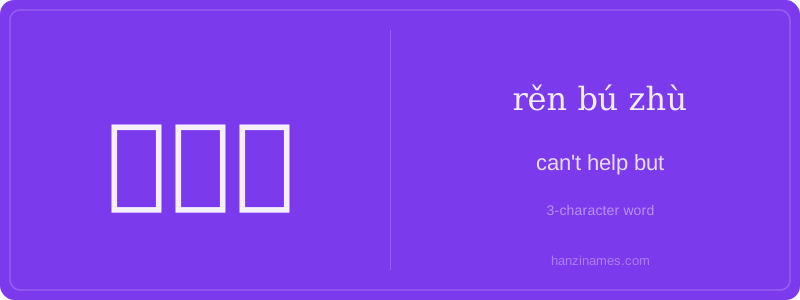
忍 is a verb meaning 'to endure' or 'to hold back,' 不 is a negation meaning 'not,' and 住 means 'to stay' or 'to remain.' Together, 忍不住 literally translates to 'can't help but' or 'can't hold back.' It describes an action that happens involuntarily, often due to strong emotions or impulses.
The character 忍 combines the radical 心 (heart) with 刃 (a blade), suggesting the mental effort required to hold back feelings or actions. 不 adds negation, while 住 emphasizes staying in a state. The phrase reflects the struggle between restraint and impulse.
忍 is commonly used in expressions like 忍耐 (endurance) and 忍辱 (bearing insults). 忍不住 appears in daily conversations when someone acts on instinct, such as laughing at a joke or crying at an emotional moment. It's often used in both positive and negative contexts, highlighting human vulnerability and natural reactions.