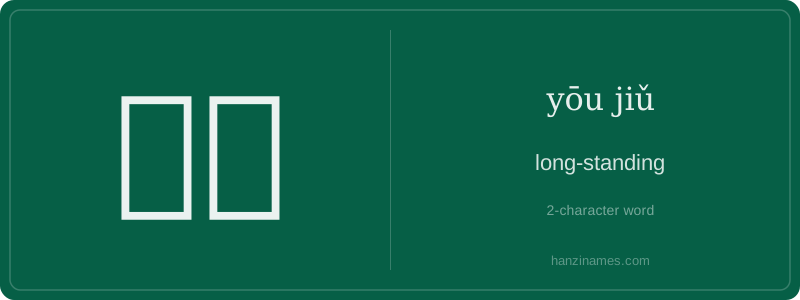
悠久
How to Say
👀 0
How to Write
Meaning: long-standing
How to Understand
悠久
悠久 means 'long-standing' or 'long-lasting,' often used to describe something with a long history or deep roots. It emphasizes the depth and continuity of time, distinguishing it from simpler terms like 'old' or 'ancient.'
The character 悠 (yōu) originally meant 'leisurely' or 'carefree,' but in this context, it conveys a sense of calm endurance over time. 久 (jiǔ) directly means 'long' or 'for a long time.' Together, they suggest a lasting, enduring quality.
悠久 is commonly used in cultural and historical contexts, such as describing ancient traditions, historical sites, or long-established institutions. It carries a respectful and reverent tone, often evoking a sense of pride in heritage and continuity.
Example Sentences
中国有着悠久的历史,可以追溯到几千年前。
China has a long-standing history that can be traced back thousands of years.
这个寺庙有悠久的佛教传统,吸引了无数信徒。
This temple has a long-standing Buddhist tradition that has attracted countless believers.