物资
How to Understand
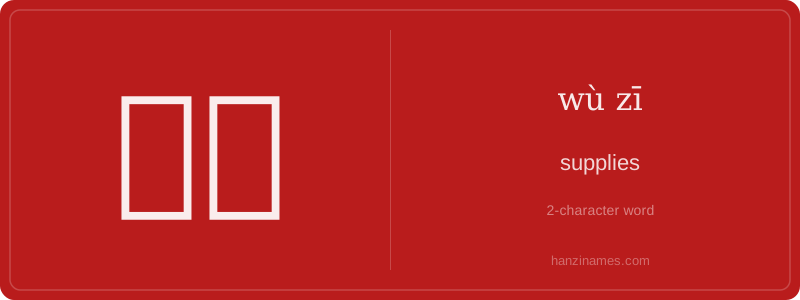
物资 refers to supplies, provisions, or materials, typically in the context of goods needed for a specific purpose, such as disaster relief, military operations, or daily life. It emphasizes tangible items rather than abstract concepts.
The character 物 (wù) means 'object' or 'matter,' and 资 (zī) means 'resources' or 'funds.' Together, they convey the idea of material resources or supplies. This term has roots in classical Chinese and is often used in formal or administrative contexts.
物资 is commonly used in situations involving logistics, emergency management, or resource distribution. For example, during natural disasters, governments send 物资 to affected areas. It can also refer to everyday essentials like food or medical supplies. Understanding this term helps learners grasp how Chinese society organizes and manages resources.