拿出
How to Say
👀 0
How to Write
Meaning: to take out
How to Understand
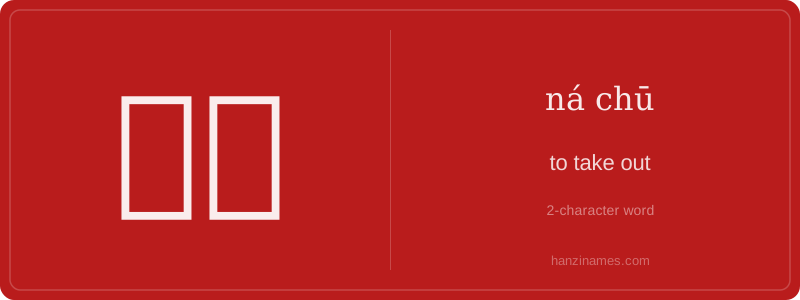
拿出
拿出 means 'to take out' or 'to produce' in English. It refers to the action of removing something from a place or presenting it physically, often used in contexts like retrieving an object, showing evidence, or revealing a secret.
The character 拿 (ná) means 'to hold' or 'to take,' while 出 (chū) means 'to go out' or 'to emerge.' Together, they form a compound verb that literally translates to 'to take out' or 'to bring out.'
拿出 is commonly used in daily conversations when someone retrieves something from a bag, presents an item, or reveals information. It can also be used metaphorically, such as in '拿出证据' (to present evidence) or '拿出勇气' (to show courage).
Example Sentences
他从包里拿出了钥匙。
He took the keys out of his bag.
她拿出了一个惊喜给朋友。
She took out a surprise for her friend.