眼下
How to Understand
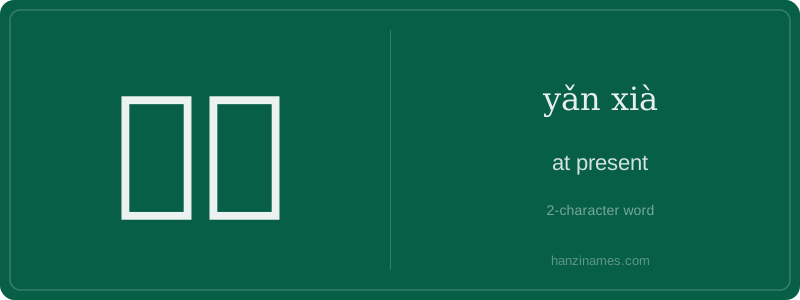
眼下 means 'at present' or 'currently', indicating the current time or situation. It is often used to contrast with past or future events, emphasizing the immediate moment.
The character 眼 (yǎn) means 'eye,' and 下 (xià) means 'below' or 'down.' Together, they literally translate to 'below the eye,' which metaphorically refers to the present moment, as if it's directly in front of one's eyes. This phrase reflects the idea of something being immediately visible or relevant.
眼下 is commonly used in daily conversations, news reports, and formal writing to highlight current conditions or issues. It can also be part of fixed expressions like 眼下形势 (the current situation) or 眼下问题 (current problem). Understanding its usage helps learners grasp temporal context in Chinese communication.