内外
How to Understand
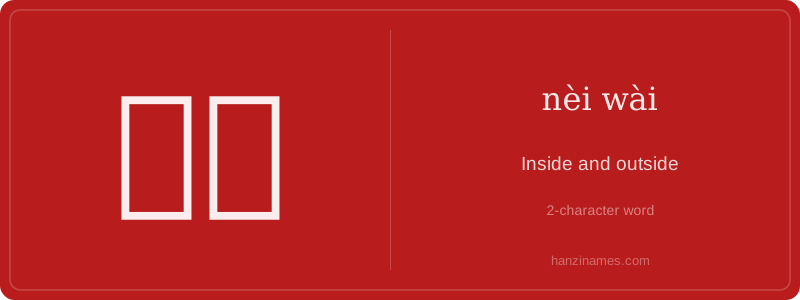
内外 refers to the concept of 'inside and outside' or 'interior and exterior.' It is often used to describe a contrast or relationship between two opposing or complementary spaces, such as physical locations, emotional states, or social roles.
The character 内 (nèi) means 'inside,' while 外 (wài) means 'outside.' Together, they form a compound that emphasizes duality and balance. This term has roots in classical Chinese philosophy, where the idea of internal and external harmony was central to concepts like health, morality, and governance.
Internally, 内外 can refer to one's inner feelings or thoughts, while externally it describes outward behavior or appearance. In daily use, it is common in contexts such as describing a building’s interior and exterior, or discussing personal and public life. It also appears in idioms and proverbs that emphasize the importance of maintaining balance between these two aspects.