脖子
How to Understand
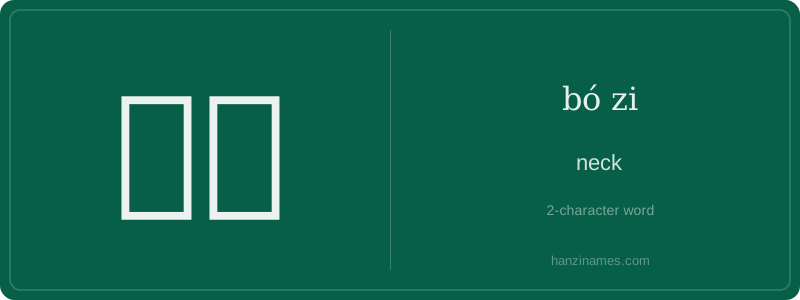
脖子 (bó zi) is the Chinese word for 'neck,' referring to the part of the body connecting the head to the torso. It is used in both literal and figurative contexts, such as describing physical movement or expressing emotions like embarrassment.
The character 脖 (bó) means 'neck' and is a pictographic representation of the neck area. The suffix 子 (zǐ) is a common nominalizer, turning verbs or nouns into more general terms, often used in colloquial speech to create familiar or affectionate expressions.
In daily life, 脖子 is commonly used in phrases like 摇脖子 (yáo bó zi), meaning 'to shake one's neck,' or 把头伸出来 (bǎ tóu shēn chū lái), which literally means 'to stick out one's neck' but is often used metaphorically to describe taking risks. Understanding 脖子 helps in grasping body-related expressions and cultural idioms.