民众
How to Understand
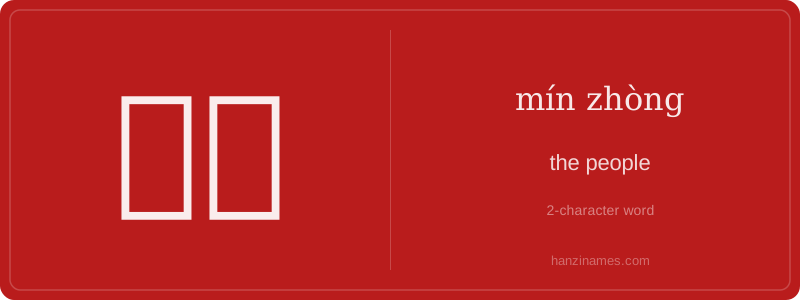
民众 refers to the general population or common people, often used in a collective sense to describe the masses of citizens. It emphasizes the collective identity of the people rather than individuals, and is commonly used in political, social, or public contexts.
The character 民 (mín) means 'people' or 'citizen,' while 众 (zhòng) means 'many' or 'crowd.' Together, they form a term that literally means 'many people,' highlighting the idea of a large group of individuals united under a shared identity or society.
民众 is often used in formal or official language, such as in government statements or news reports. It can also appear in literature or historical texts to describe the role or influence of the general public. In modern usage, it is sometimes contrasted with more specific terms like 群众 (qúnzhòng), which can have a more negative connotation.