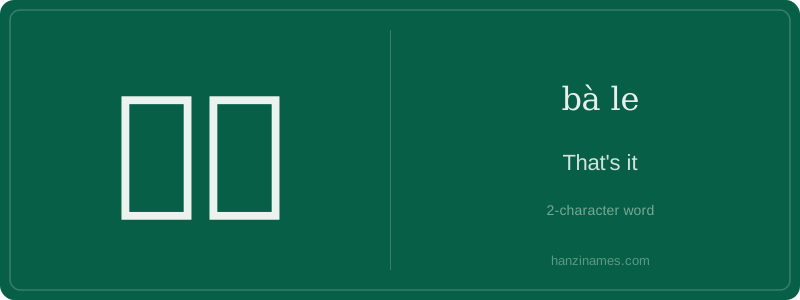
罢了
How to Say
👀 0
How to Write
Meaning: That's it
How to Understand
罢了
罢了 is an adverb that conveys a sense of conclusion or acceptance, often used to indicate that something has reached a natural end or that one is giving up on a situation. It can imply resignation, finality, or a decision to stop pursuing something.
The character 罢 (bà) originally meant 'to dismiss' or 'to end,' while 了 (le) is a particle indicating completion or change of state. Together, they form a phrase that suggests the end of an action or the acceptance of a situation.
Used in daily conversations, 罢了 often appears in expressions like “算了” (suàn le), which means
Example Sentences
他决定放弃了,事情就这样结束了。
He decided to give up; things just ended like that.
别再想了,事情已经这样了。
Don't think about it anymore; the matter is already settled.