压迫
How to Understand
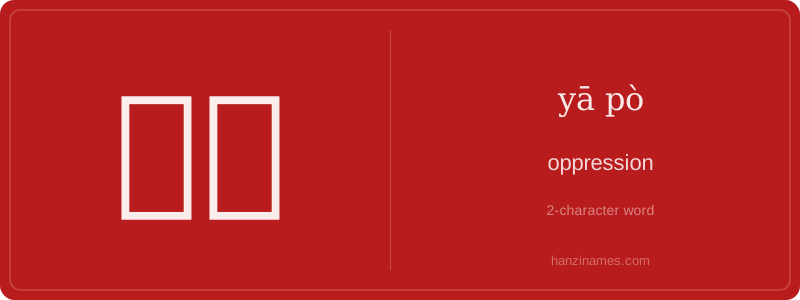
压迫 refers to the state of being subjected to harsh treatment, pressure, or control, often in a systemic or institutionalized way. It emphasizes the feeling of being forced down or restricted, especially by external forces such as authority, social structures, or oppressive regimes.
The character 压 (yā) means 'to press' or 'to oppress,' while 迫 (pò) means 'to force' or 'to compel.' Together, they form a compound that conveys the idea of being forced into a difficult or uncomfortable position, often with a sense of injustice or violation of rights.
压迫 is commonly used in political, social, and historical contexts, especially when discussing human rights issues, inequality, or authoritarian governance. It is an important term for understanding discussions about freedom, resistance, and justice in Chinese society.